Client work
H2A
A Shopify store built to sell from the phone, then a working rebuild off Shopify: its own admin, checkout, couriers and riders.
The problem
H2A sells streetwear in Egypt to people who shop on their phones. A clothing buyer decides on the front, the back, the fit and the price, and the store showed little more than the front.
Behind the store, most orders are cash on delivery and leave through several couriers, and on Shopify every extra step is another paid app.
What nobody noticed
On a phone, the static product grid showed the front of each piece and little else, and some pieces had no back photo at all.
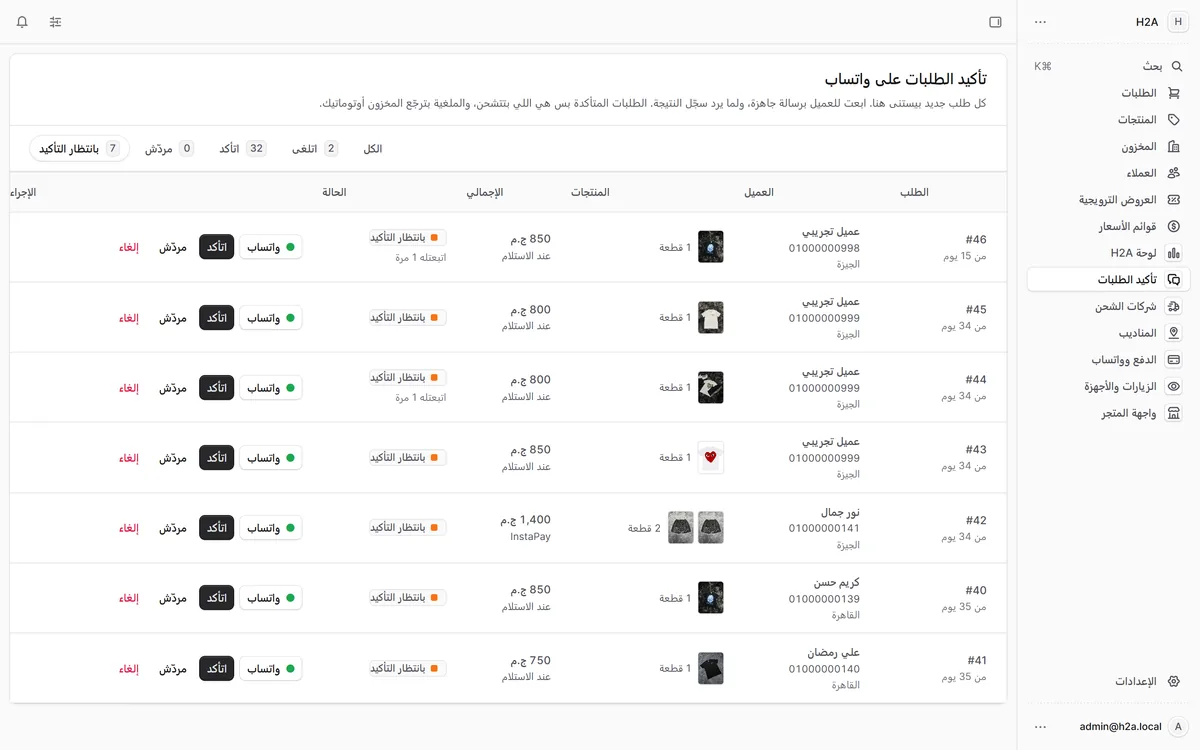
Many cash-on-delivery orders are never collected, so each order has to be confirmed before it ships. Shopify's checkout has no place for that step, or for paying by InstaPay or a mobile wallet.
What I built
- On Shopify: a clothing rail built from the store's own product photos (swipe to browse, tap to pull a piece forward, drag to turn it), a rail per season, product pages that lead with the garment, and Find my size.
- A bag that names each size and shows progress toward the store offer, checked on the live store; 35 automated tests and a Shopify theme check without reported errors.
- Then the rebuild off Shopify, as a working demo: the same Liquid theme rendered over an open-source commerce backend, with an Arabic admin that carries only the H2A brand.
- Checkout with cash on delivery, InstaPay and mobile wallets, and an order confirmation screen: every new order waits there until the team confirms it on WhatsApp, and only confirmed orders ship.
- Couriers in the admin: an Excel sheet for the courier that works by sheet, and API adapters for Mylerz and Bosta.
- Its own riders: a printed QR label per order, a rider page that needs no app, and a delivery scan that is accepted only within 50 m of the customer's map pin. Cash per rider and returns are tracked in the admin.
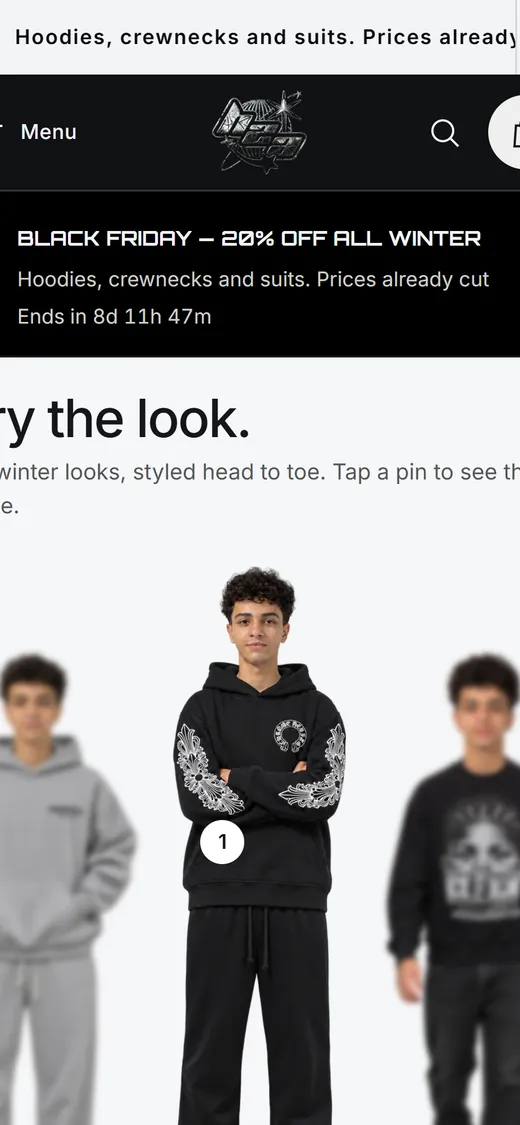
- Sale price lists (Black Friday: 20% off winter, with a countdown on the store) and a "try the look" runway on the homepage.
My role in the projectUX/UI design and Shopify theme development on the live store. For the rebuild: design and full-stack development of the backend modules, admin pages, checkout, couriers and the riders system.
Screens
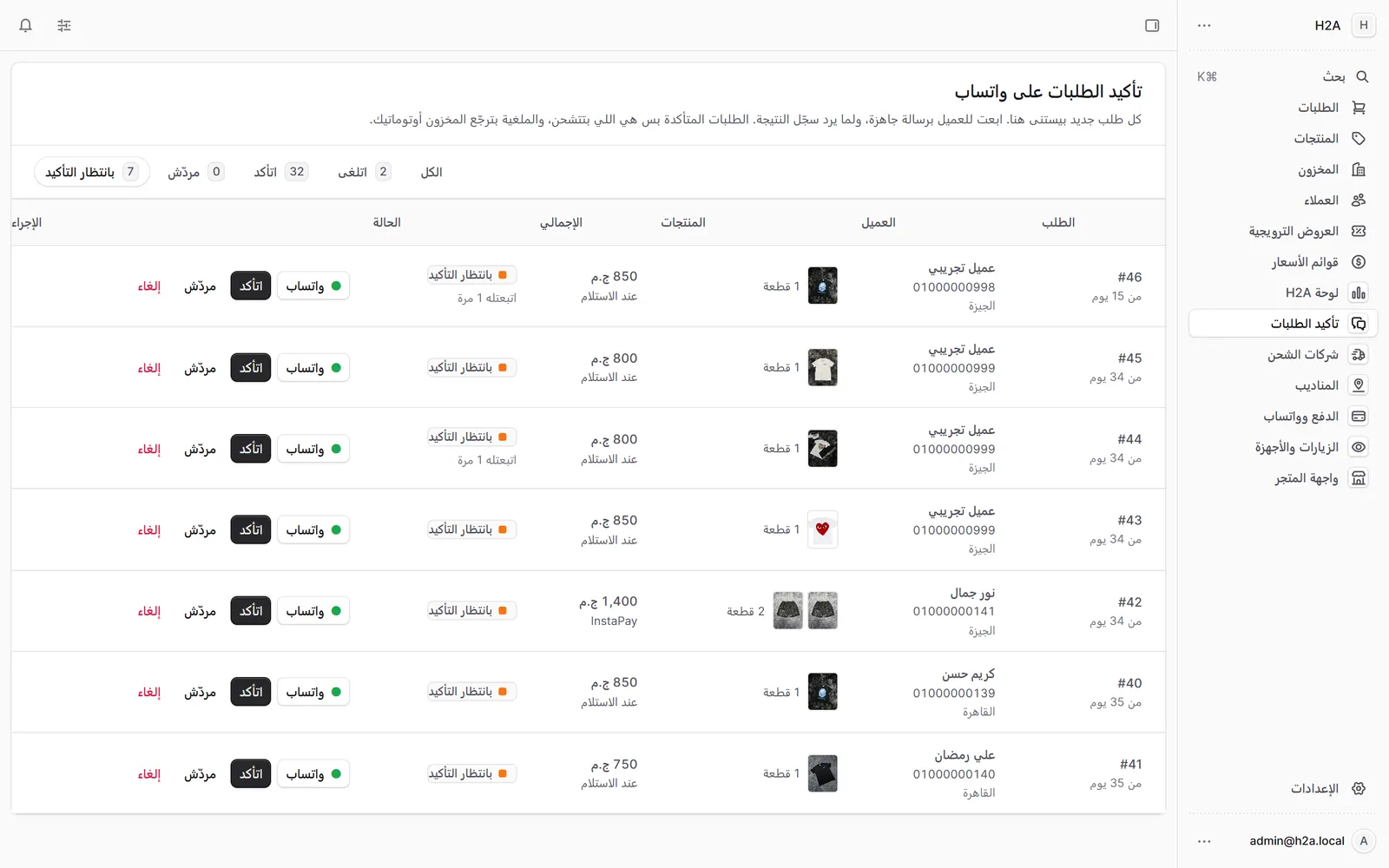
Rebuild · Order confirmationEvery order waits here until it is confirmed on WhatsApp 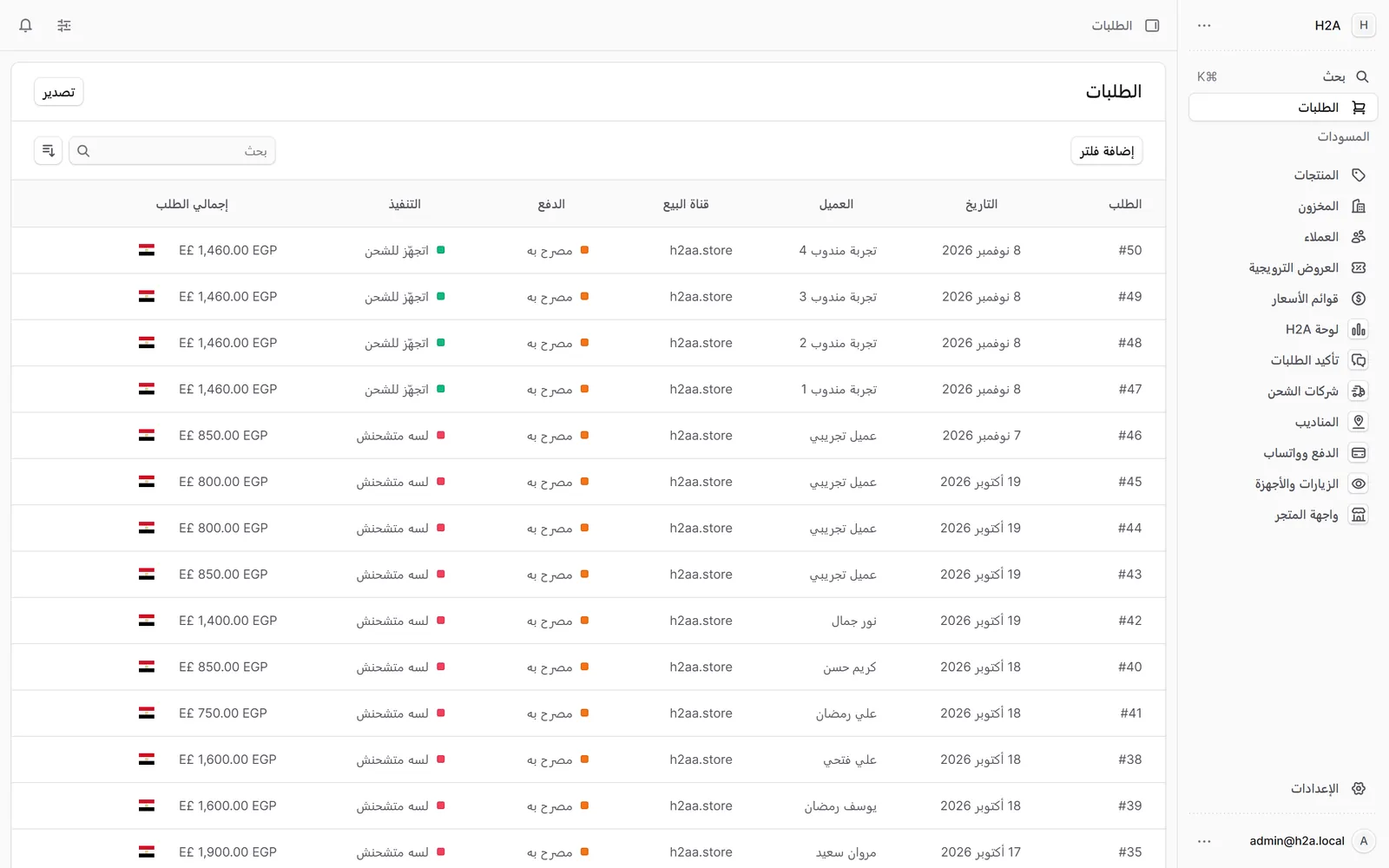
Rebuild · OrdersThe Arabic admin, H2A brand only; demo orders 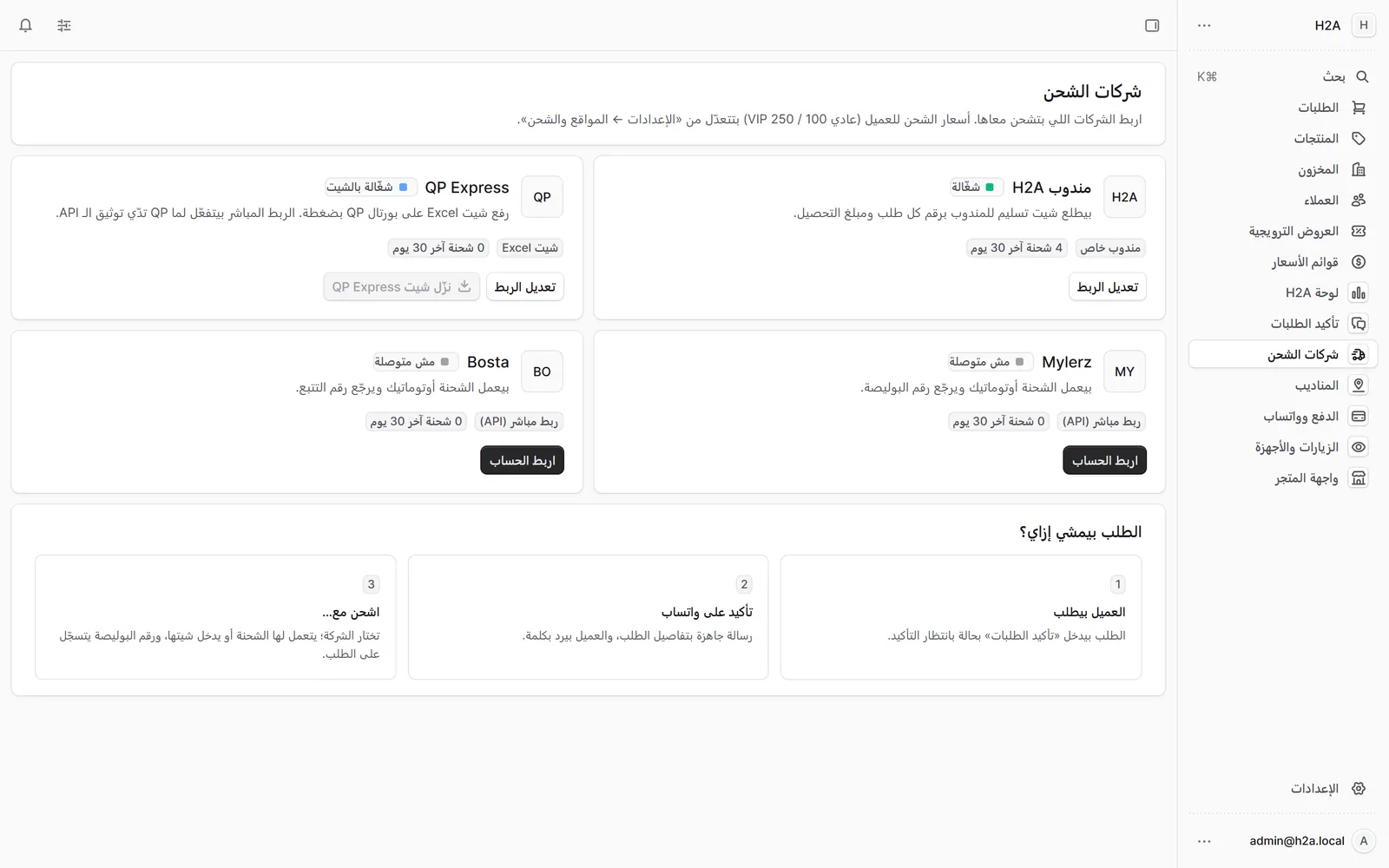
Rebuild · CouriersOwn riders, an Excel courier, and API adapters 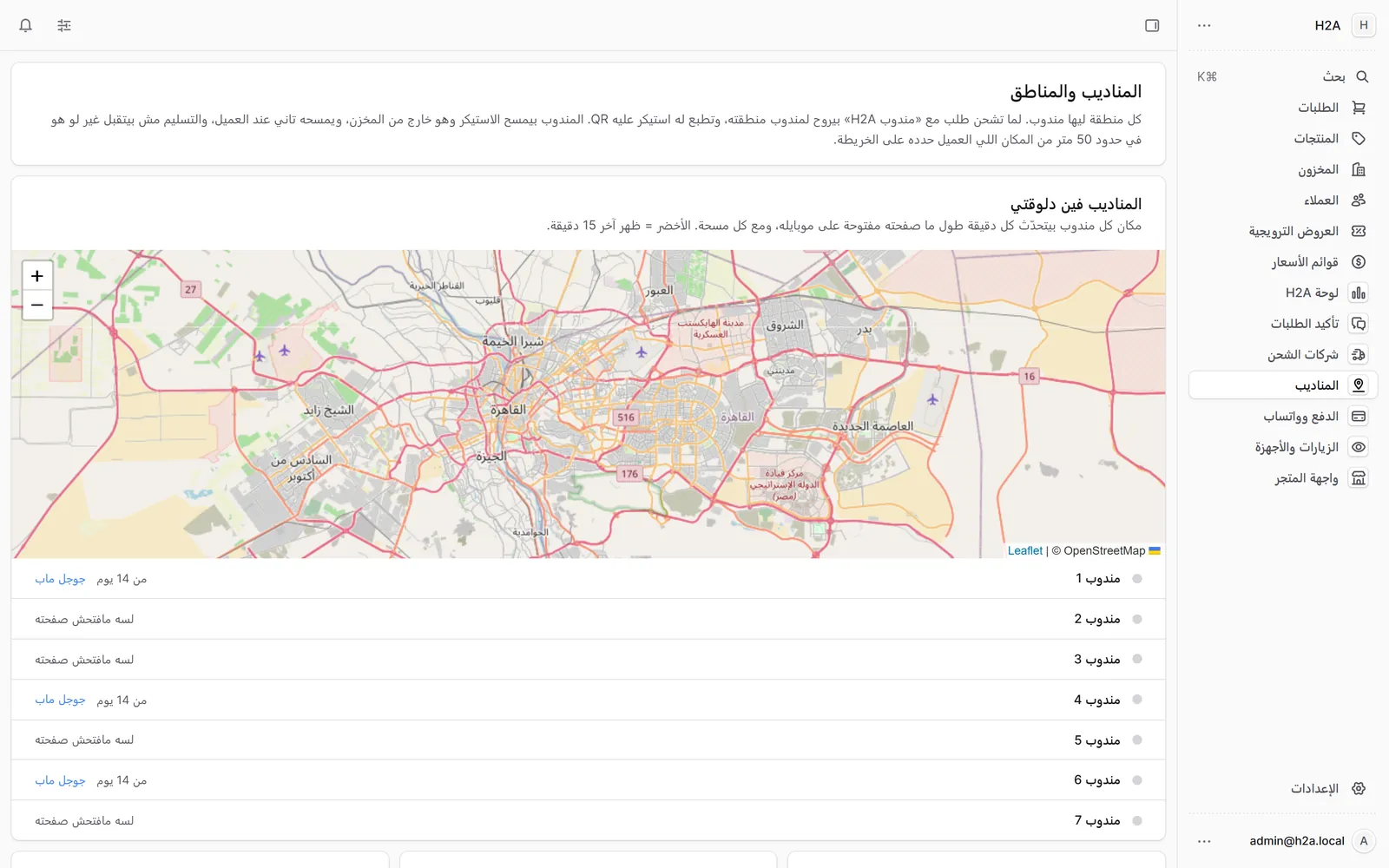
Rebuild · RidersZones, riders and where each one was last seen 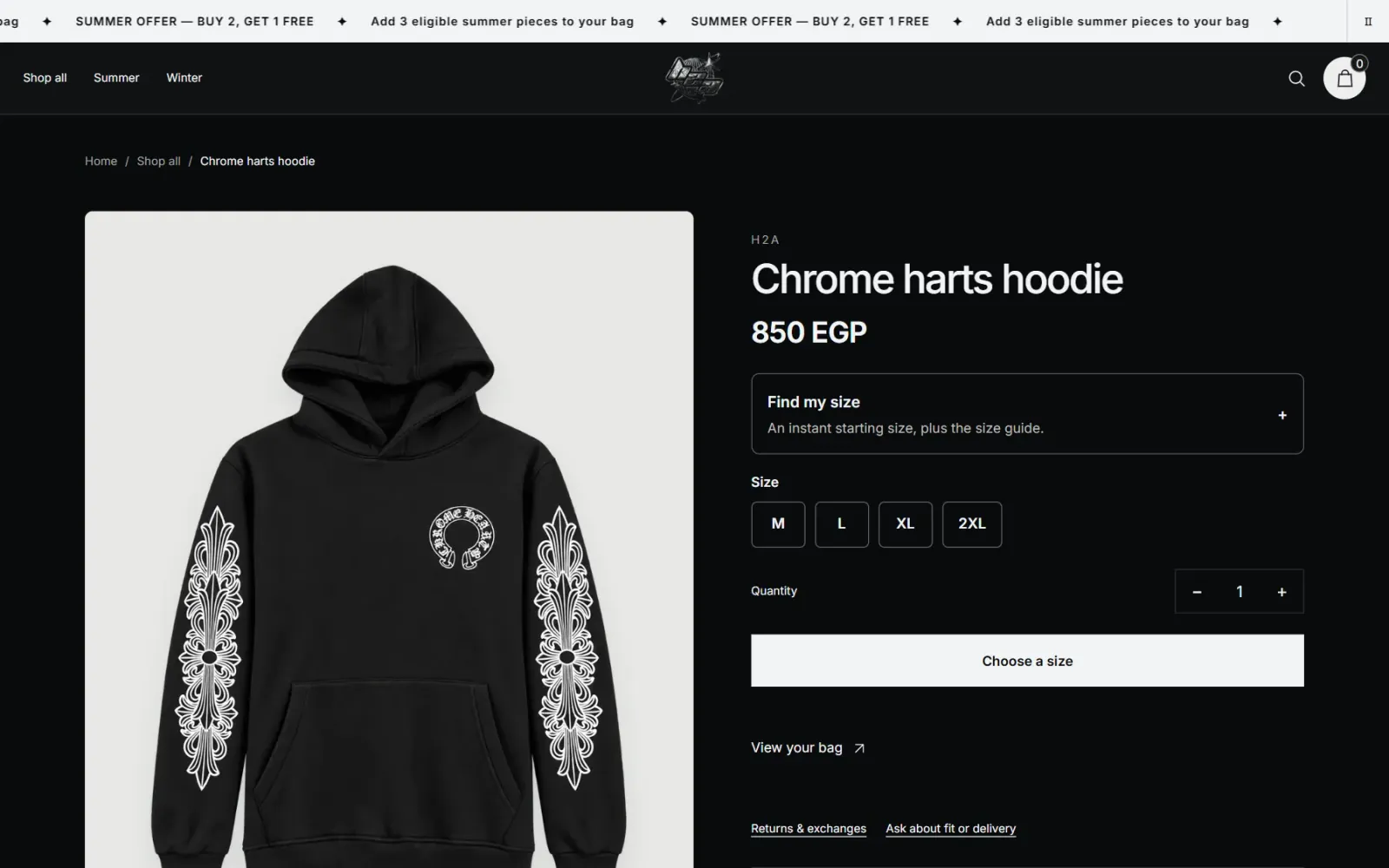
Shopify · Product page on desktopGallery, price and sizes side by side
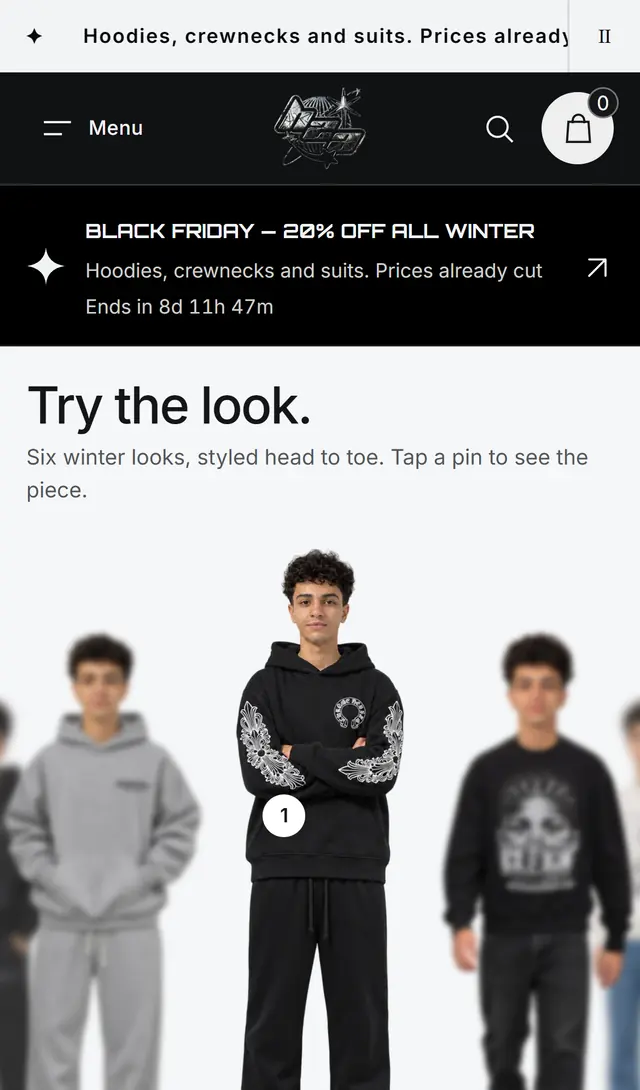
Rebuild · Try the lookWinter looks with pins; model photos are AI-generated 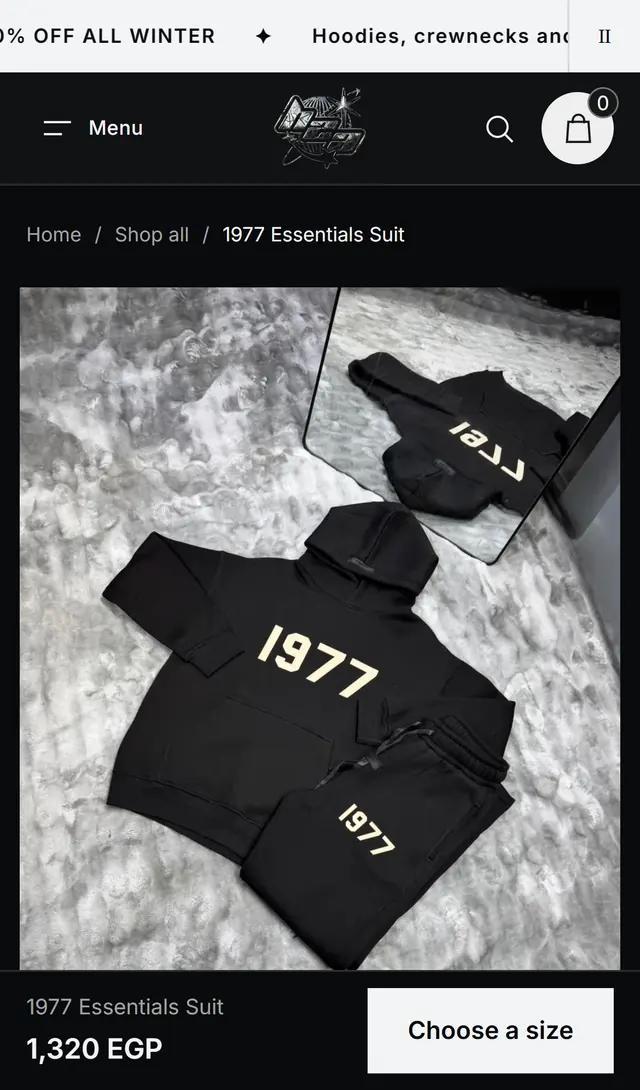
Rebuild · Product pageThe merchant's own photo, size first 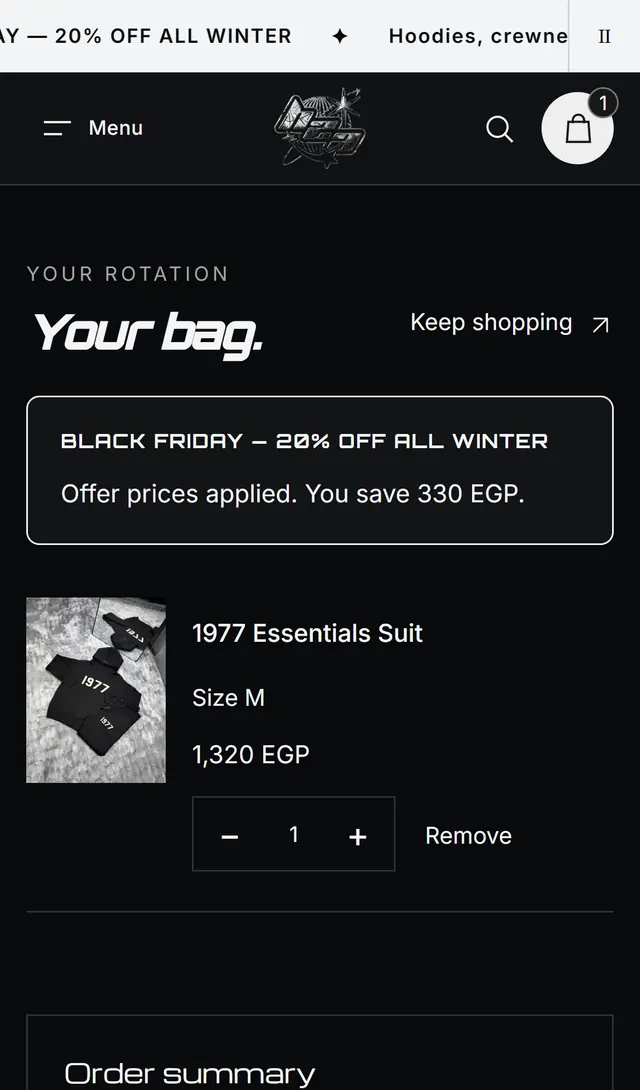
Rebuild · BagBlack Friday price list applied 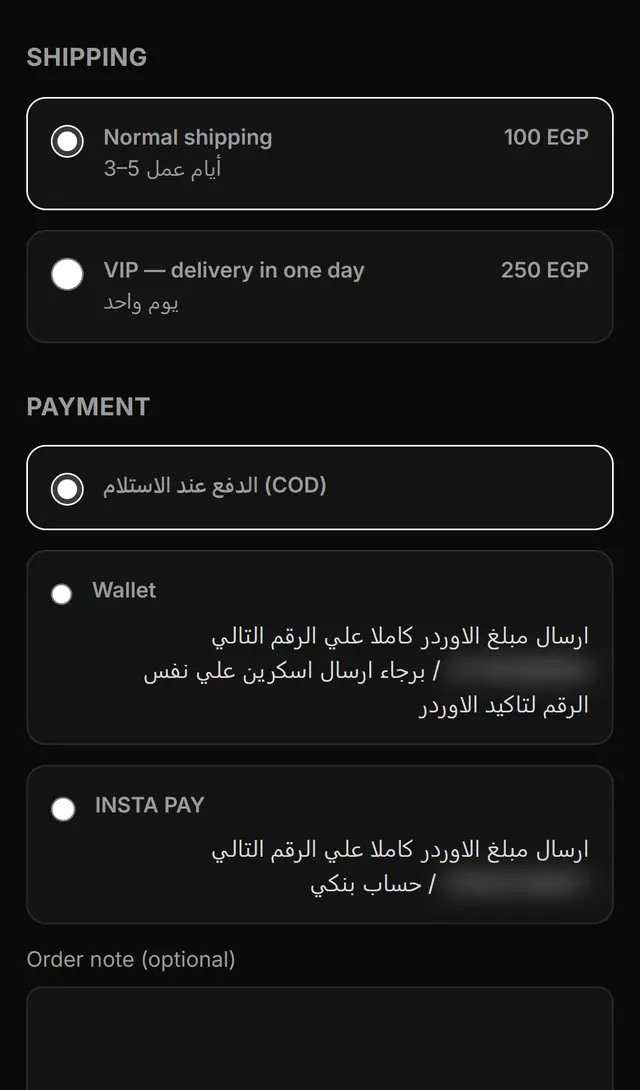
Rebuild · CheckoutCash on delivery, wallet or InstaPay 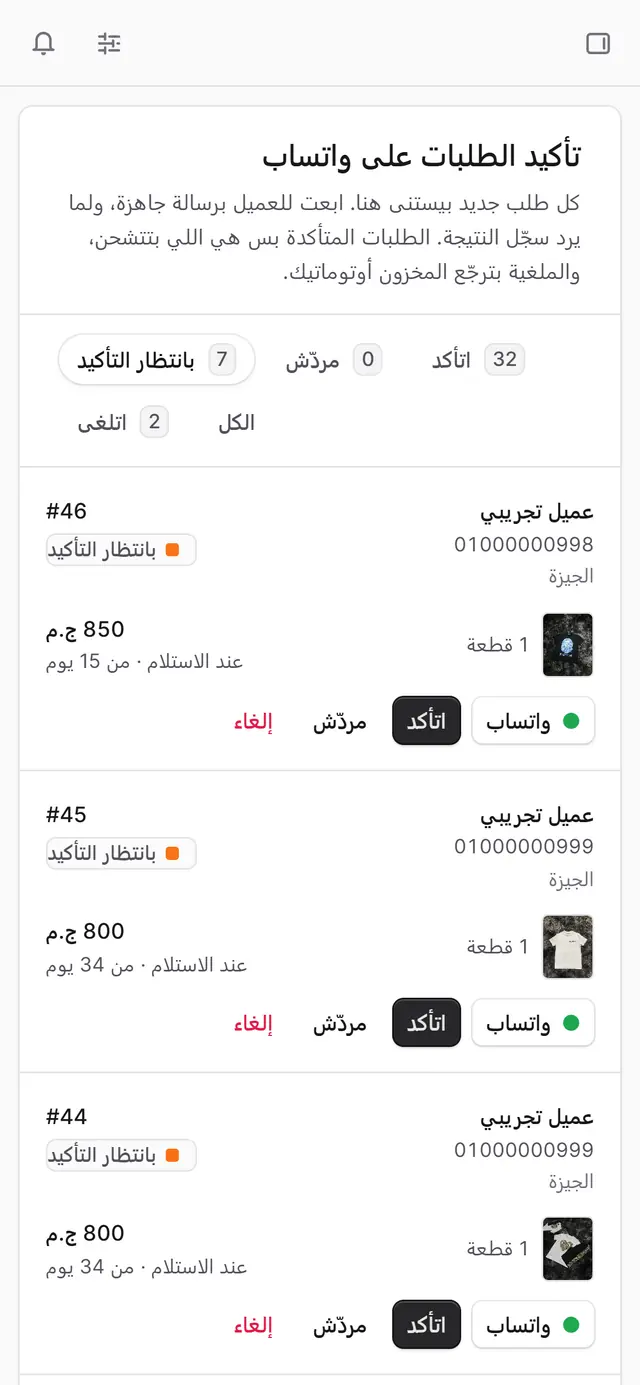
Rebuild · Admin on a phoneConfirm, reschedule or cancel 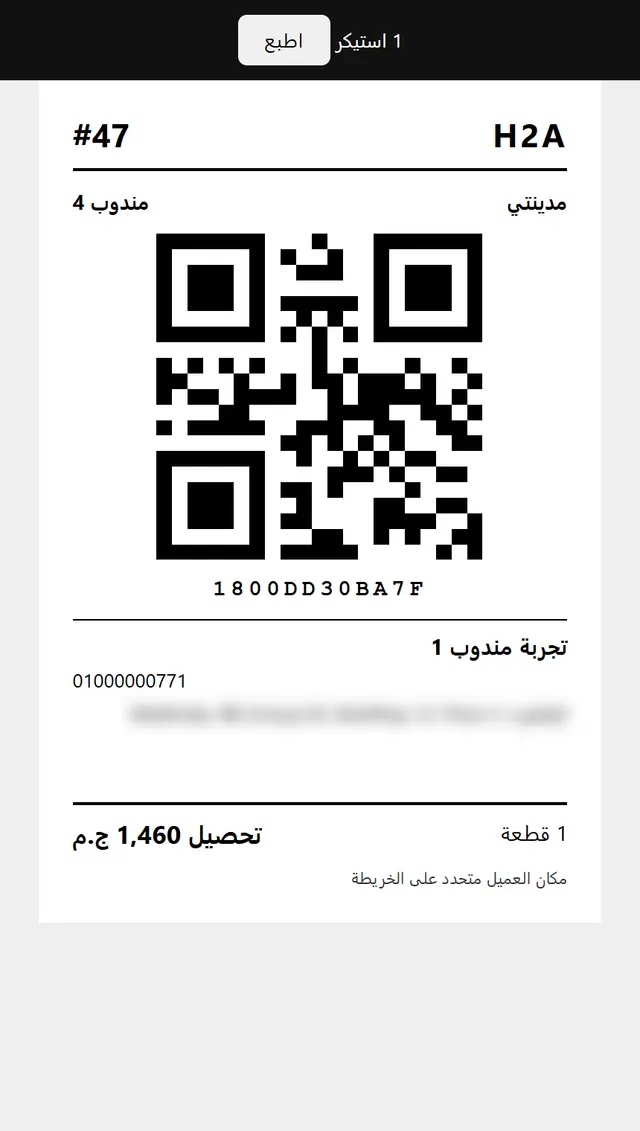
Rebuild · Rider labelQR with the job code only; street line blurred here 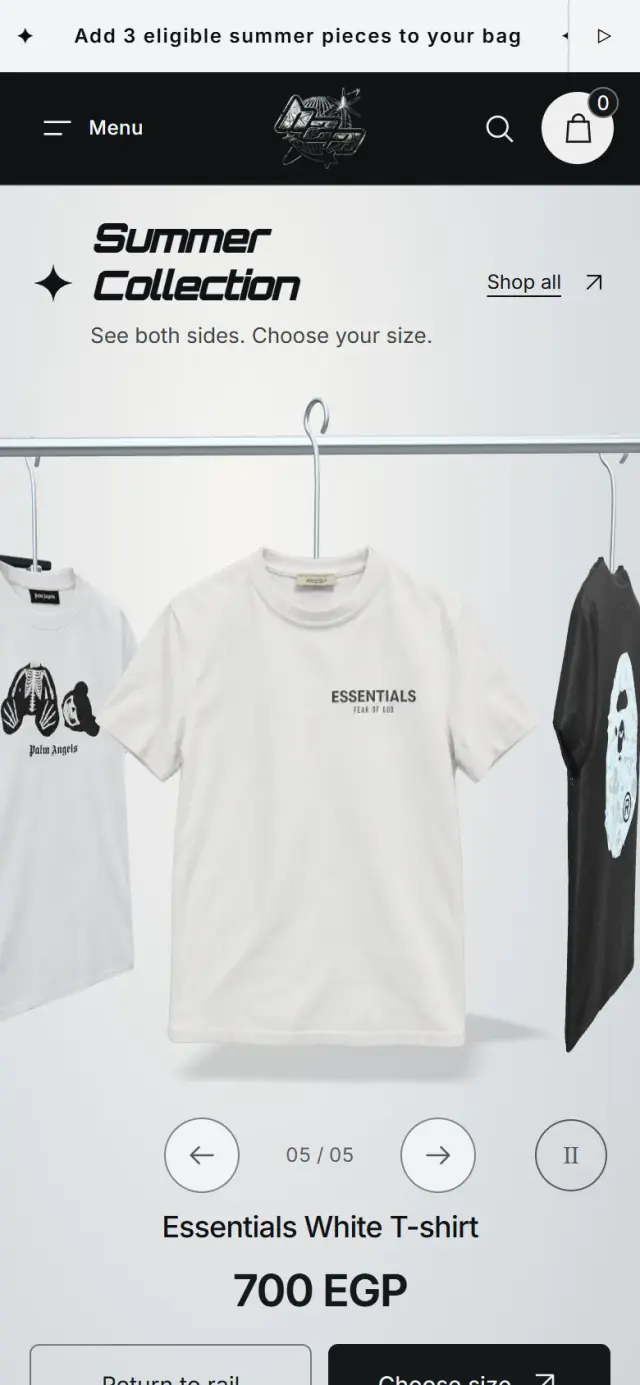
Shopify · Browse the railSwipe, tap, pull forward 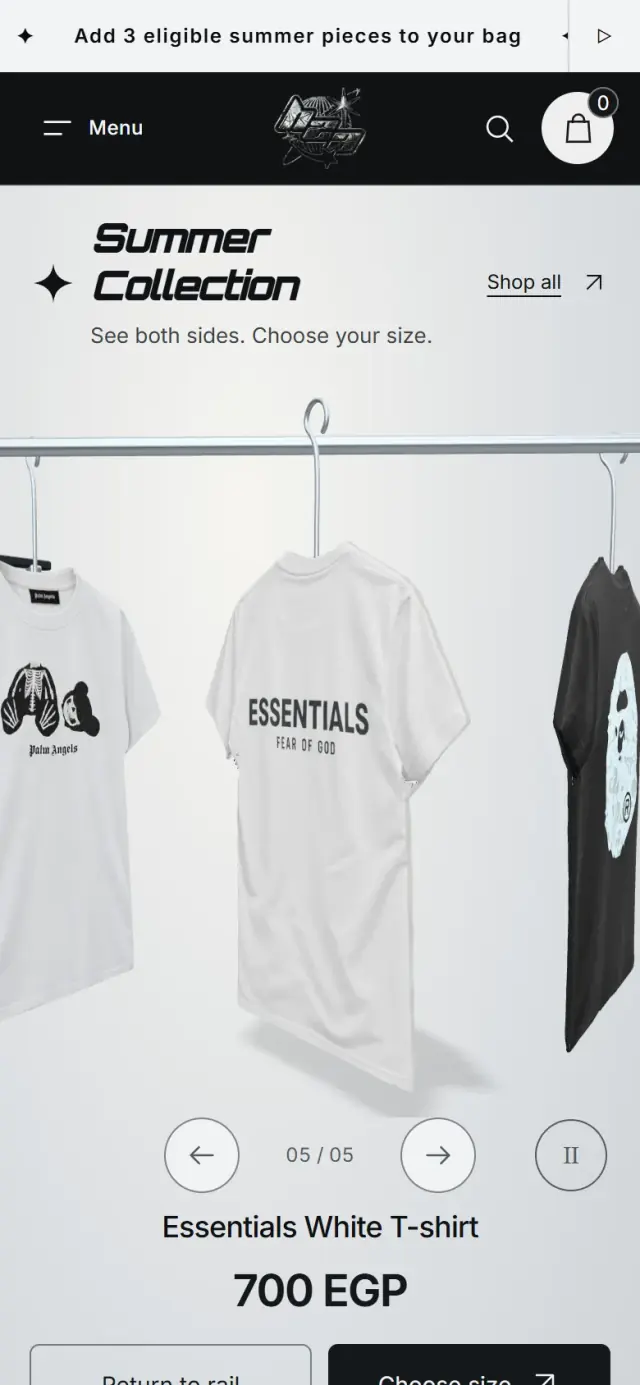
Shopify · Turn the pieceDrag to see the side and back 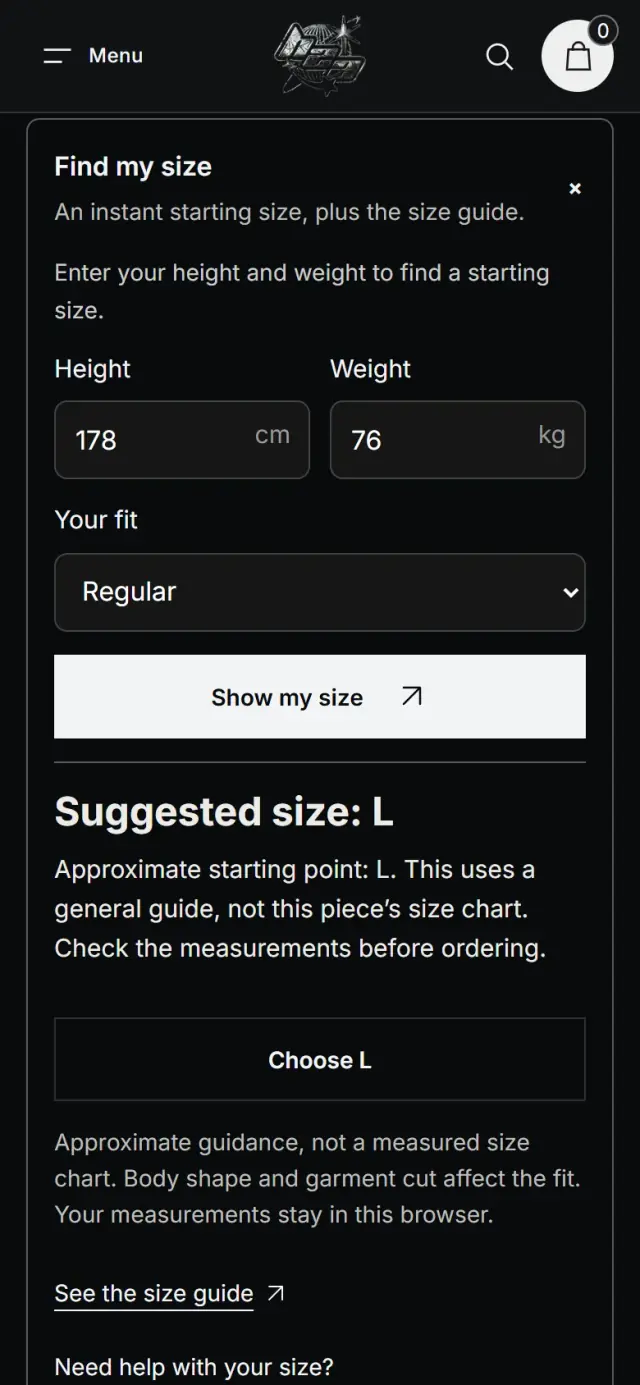
Shopify · Find my sizeAn immediate, labelled estimate
Honest scope
- The live store at h2aa.store is still on Shopify. The rebuild is a working demo, not yet live; the client is reviewing the move.
- The Mylerz and Bosta API adapters are untested with real keys.
- Sales, conversion and order figures are private, so none are shown here. Orders in these screens are demo orders with fake names and 01000000xxx numbers; the store's own payment numbers and one test address are blurred.
- The runway's model photos are AI-generated. Product pages keep the merchant's own photos.
- The Shopify rail is a photo-based representation, not a scanned 3D garment; where a piece has no rear photo, it shows a prepared plain rear. Size guidance stays approximate.
Send your
store link.
I'll reply with a 1-minute video and three things nobody told you.