Real client work · anonymised · demo data
Qayd
Every order becomes a correct invoice in your accounting, without typing it twice.

The problem
A Saudi store sells on Salla and Shopify and keeps its books in Wafeq. Done by hand, every order is typed twice and checked three times.
What nobody noticed
Mada, Tabby, Tamara and cash on delivery each settle into a different account, and a cancelled order needs a credit note against its original invoice. One order is never just one invoice.
What I built
- The invoicing rules as Zapier code steps: each order becomes an invoice, a payment on the right account, or a credit note in Wafeq. This version runs in production.
- The next step on a Cloudflare Worker with its own database: retries after 5, 15, 60 and 360 minutes, and a short to-do list for what needs a person, sent to Telegram.
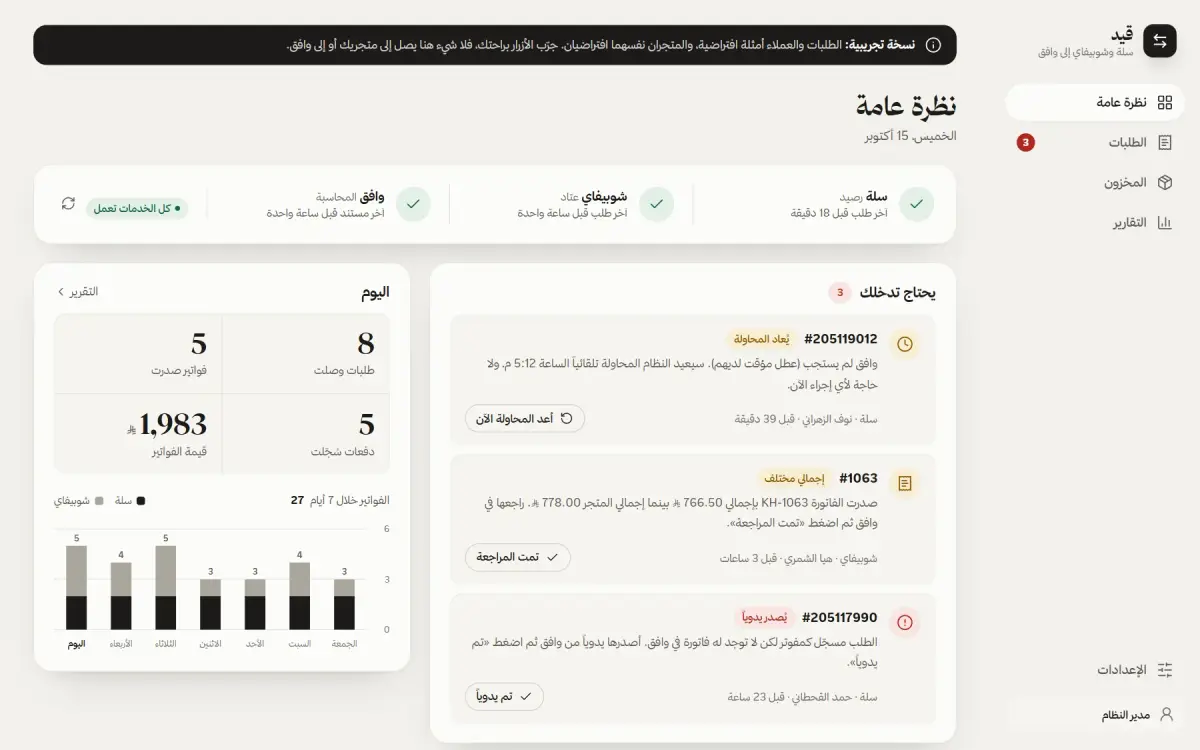
- An Arabic panel for the owner and the accountant: every order beside its Wafeq invoice, on desktop and on a phone.
- Product matching for the shared stock: pairs proposed by name, approved by hand before any quantity moves.
- Reports for any period as an Excel file, built in the browser.
My role in the projectI designed the integration and built the server and the tracking panel. The e-invoice itself is issued by Wafeq.
Screens
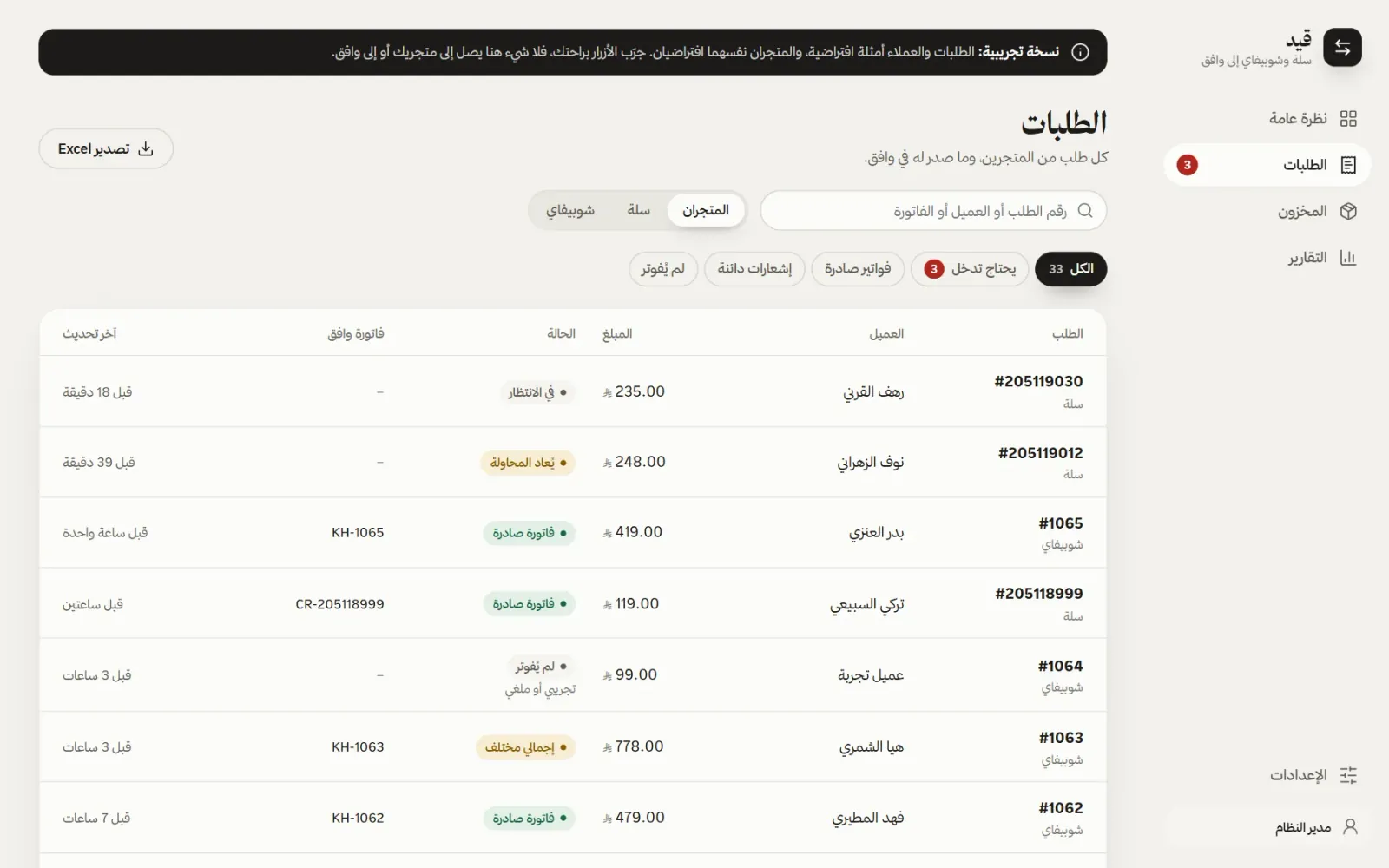
OrdersBoth stores in one list, the invoice number beside each 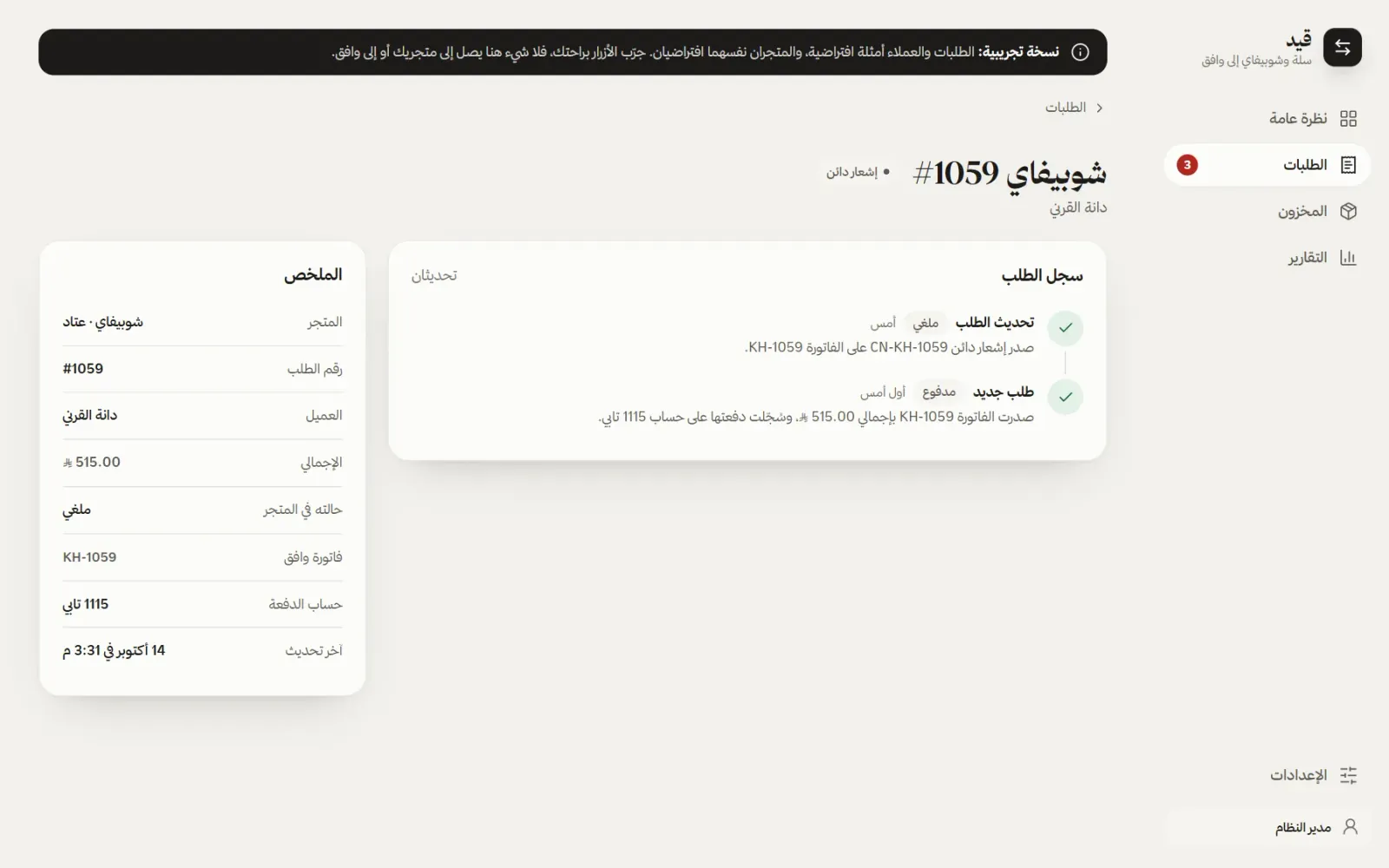
A cancellationInvoice, payment, then a credit note 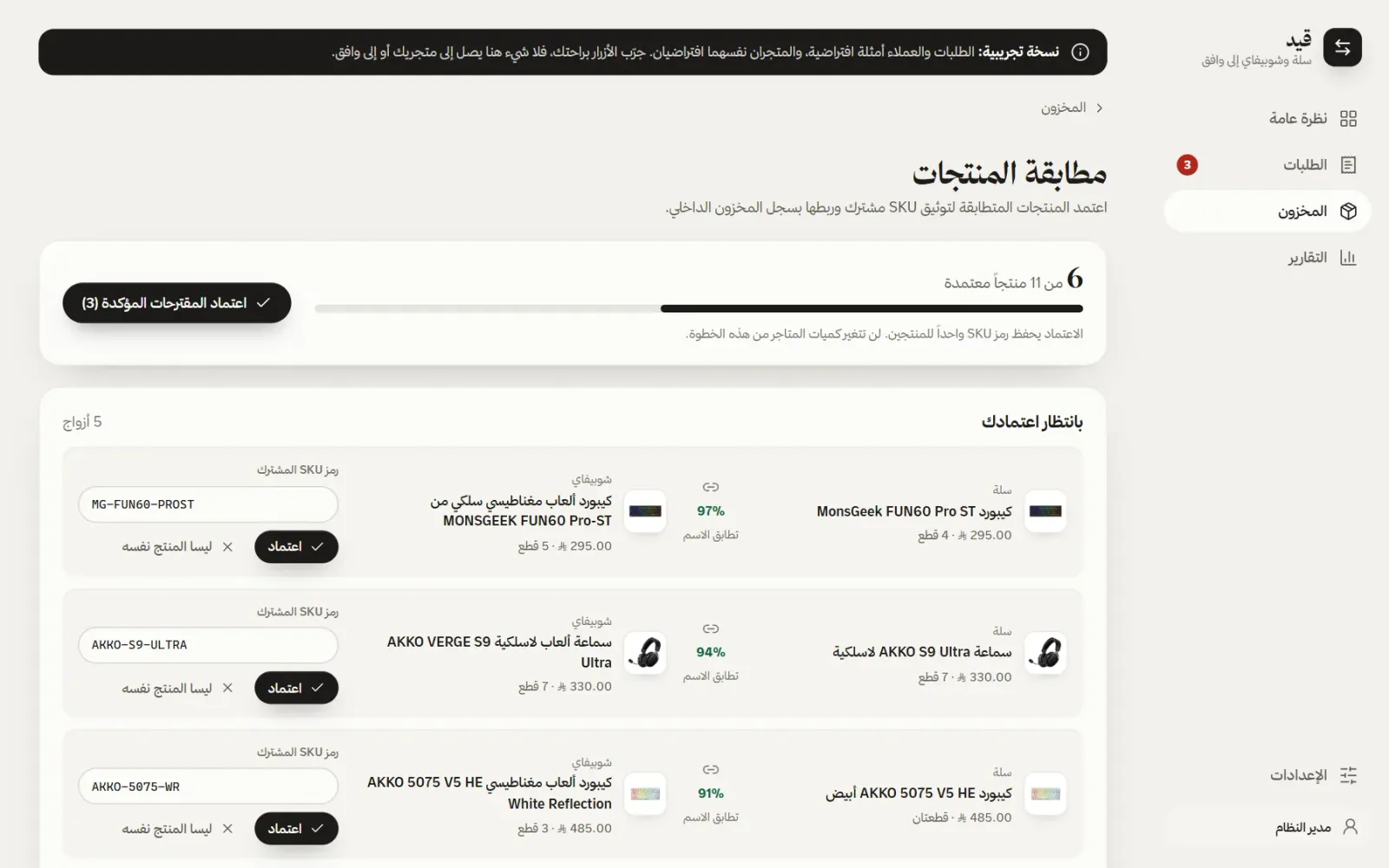
Product matchingProposed pairs, approved by hand

Needs attentionOne action per problem 
On a phoneRows become cards 
Order summaryInvoice and payment account 
Excel downloadReady for the accountant
Captured from the demo: fictional stores, invented customers and sample orders.
The numbers
-
Zapier tasks per invoiced order
≈4 →1
How it was measuredCounted in Zapier's task history. The old flow spent about four tasks per order (code, contact, invoice, payment); after merging them into one code step, a real order ran for one task.
-
Orders the same Zapier plan can carry
125–150 →600–700
How it was measuredThe plan's task allowance divided by the tasks each order spends, before and after the change.
Honest scope
- Real client work, anonymised: the client is not named, and the stores, customers and orders in these screens are fictional demo data.
- The client chose to keep the simpler Zapier setup, so the Worker never went live; it ran only in shadow mode beside it.
- Shared-stock sync waits on matching SKUs and has not run on real stock.
- No time or cost savings have been measured.
Demo offline
All workSend your
store link.
I'll reply with a 1-minute video and three things nobody told you.